Company Biography
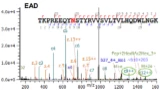
As the number of biotherapeutic protein candidates in development is steadily increasing, the requirements of analytical tools to understand the molecules better early in the process are rising as well. Mass spectrometry plays an important role in the characterization and quality assessment of biotherapeutic proteins with peptide mapping being the gold standard to assess post-translational modifications (PTMs). However, traditionally used collision-induced dissociation (CID) has a number of limitations in PTM identification and localization. It is limited in its ability to determine amino acid isomers, provide comprehensive information on dissociation-labile modifications, such as glycosylations including their localization. ExD, however, used to struggle with sensitivity, reproducibility, and acquisition speed, which restrained the widespread adoption as the primary technique for peptide mapping. Here, a novel fragmentation technique called electron activated dissociation (EAD), a type of ExD, was evaluated for peptide mapping and specifically assessing challenging PTMs. The human IgG1 adalimumab was used as a model compound. The sample was denatured, reduced and digested with trypsin/LysC prior to injection onto a novel LC-MS/MS Q-TOF system (ZenoTOF 7600 system, SCIEX). Data were acquired using data-dependent acquisition (DDA) with either collision-induced dissociation (CID) or EAD mode. Results show that peptide sequence coverages of both methods were comparable, whereas EAD provided higher fragment coverages for peptides containing glycosylation as well as very long peptides without tryptic cleavage sites. In addition, fragments containing the intact glycosylation were determined enabling an unambiguous localization of the modification in the case of EAD. Furthermore, deamidated species with isoaspartate formation could be clearly differentiated from aspartate as well as leucines from isoleucines due to diagnostic fragments derived from EAD, whereas the fragmentation pattern obtained from CID did not allow for this differentiation. In sum, an in-depth automatic DDA peptide mapping approach based on EAD could be established being superior to CID.
Contact Information
Team Members

Haichuan Liu
SCIEX
Presenter
Elliott Jones
SCIEX
Co-Author
Kerstin Pohl
SCIEX
Co-Author