Company Biography
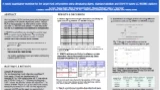
Poster pdf file Host cell proteins (HCPs) are those produced by the organisms and unrelated to the intended recombinant product. Residual HCPs in the drug product can affect product quality, stability, and safety. It is important to measure the relative levels (ppm) of a specific HCP that shows potential health risks to improve process knowledge and monitor HCP clearance. LC-MS/MS based methods have been widely used for HCP identification and quantitation in biotherapeutics. A SWATH-based platform was developed to quantify target HCPs to support process development. The method sensitivity has been established at 2.5-20 ppm for quantifying nine different proteins in a reference monoclonal antibody. Two quantitative strategies were evaluated for this platform. With the conventional strategy, protein quantitation is based on the average signal responses of the top 3 peptides per mole of protein in comparison with a known spiked reference protein. Using the standard addition strategy, protein concentration was extrapolated from a calibration curve generated by spiking various known amounts of the corresponding recombinant protein standard into each sample of interest. The standard addition approach generates more reproducible results within and across testing runs. Both native digestion and protein denaturation digestion were also assessed for a fast relative quantitation of a target protein at 5-50 ppm. Denaturing digestion shows lower detection limit but more consistent quantitative results than native digestion. The relative quantitation results were further confirmed by a protein-specific ELISA. This study demonstrates a robust quantitative workflow for HCP can be specifically designed using denaturing protein digestion combined with the standard-addition and SWATH-based method for quantitation.
Contact Information
Team Members

Jia Guo
Genentech, a Member of the Roche Group
Presenter
Delia Li
Genentech, a Member of the Roche Group
Co-Author
Feng Yang
Genentech, a Member of the Roche Group
Co-Author
Midori Greenwood-Goodwin
Genentech, a Member of the Roche Group
Co-Author
Regina Kufer
Roche Diagnostics GmbH
Co-Author