Company Biography
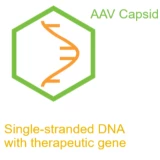
Recombinant AAVs are one of the most widely adopted vehicles in gene therapy due to their low toxicity and ability for long-term expression. AAVs consist of a protein shell made of three capsid proteins wrapping around a single-stranded DNA genome. Through the interaction between capsid proteins and cell receptors of the host, AAVs have the capability to infect both dividing and non-dividing cells. It was shown that capsid protein post translational modifications (PTM) impact infection efficiency. Therefore, a comprehensive characterization of AAV capsid protein is recommended in gene therapy development to ensure the safety and efficacy of the therapeutic. Mass spectrometry has been one of the major technologies to analyze proteins, owing to its specificity and sensitivity. Here, peptide map analysis has been employed to identify challenging PTMs and localize their exact position for two serotypes, AAV5 and AAV8. Traditional mass spectrometry fragmentation (CID/ExD) is challenged to easily provide accurate localization for dissociation‑fragile PTMs, such as phosphorylation or glycosylations. Hence, a novel QTOF instrument equipped with a novel dissociation technology, named EAD, in combination to an ion trap, was evaluated. This allowed for analysis of a wide range of peptides (from singularly-charged to large-sized). Differentiating amino acid isomers and localizing PTMs, including their relative quantification in a single data-dependent acquisition, is shown. A platform assay to fully characterize AAVs was established. This assay provides a user-friendly, in-depth characterization, enabling Leu/Ile discrimination, isoD/D differentiation, and fragile PTM localization for AAV samples.
Contact Information
Team Members

Haichuan Li
SCIEX
Presenter
Elliott Jones
SCIEX
Co-Author
Kerstin Pohl
SCIEX
Co-Author